

After talking about our kombucha with Kombuchery and nutritionist Adrienne Tonner, I took the opportunity to ask Adrienne from OhMyGut a few questions about her favorite topic, gut-friendly nutrition. We want to share her answers with you here. You'll learn more about the gut and microbiome, the gut-brain axis, and how varied a gut-friendly diet can be. Afterwards, you'll find Adrienne's bowl with our kombucha.

Would you like to briefly introduce yourself and explain the core of your work or passion?
I'm Adrienne. I'm a nutritionist, cookbook author, and knowledge and food blogger on ohmygut.de, the healthy food blog that revolves entirely around gut-friendly nutrition. When I did my training as a nutritionist, the importance of the gut for our overall health really became clear to me. It is closely connected to our entire organism. At the same time, the gut was an organ that had been somewhat neglected for a long time, which should have been given much more attention. During my specialization in the subject, I found a lot of specialist literature on gut health, but unfortunately very little culinary inspiration that really makes you want to eat gut-friendly. So I thought: "Good. Adrienne, then you take care of it now and show how fantastic gut-friendly food can taste!"

I would like to go into the topic of gut health with you. How important is the gut for our health, our well-being, and our mental state?
The gut, intestinal mucosa, and immune system are in close communication. A large part of the immune system is connected to the gut. However, how strongly individual dietary factors influence these complex connections cannot be assessed generally. Also, complaints such as fatigue, skin problems, or concentration difficulties can have many different causes and should not be generally attributed to the gut.
The gut has its own complex nervous system and is connected to the brain via the so-called gut-brain axis. Neuronal, hormonal, and immunological signaling pathways are involved in this exchange of information, among others. How these connections influence mental well-being is the subject of current research.
A small example: About 95% of the feel-good hormone serotonin is produced in the gut. If we eat well and help our body with serotonin production in this way, then we can literally feed ourselves happy with the help of our gut. Crazy, right?
In particular, the topics of inflammation reduction and the influence of sugar and sugar substitutes have increasingly come into focus.
1. There is always talk about inflammatory foci in the body. Is this also important for healthy people? Also with regard to gut health?
In our Western diet, we actually have a tendency to eat too many pro-inflammatory substances and too few anti-inflammatory foods. This leads to an imbalance and can promote the development of hidden inflammation in the body.
You have to know: Diet and lifestyle can be connected to metabolism, the gut, and general well-being in different ways. However, individual complaints such as fatigue, skin changes, concentration problems, or allergies have numerous possible causes and should not be generally attributed to inflammation in the gut. A balanced, varied diet is generally beneficial. Persistent or unexplained complaints should be medically clarified.
2. How do different types of sugar differ nutritionally? And how would you classify the sugar content of kombucha compared to other soft drinks?
Sugar
Sugar is a bit of a thing. There are many sugar alternatives on the market that give us the feeling that we are eating a little healthier. But in fact, agave nectar, maple syrup, honey, rice syrup, cane sugar, etc. are also just sugar. Like sugar, they consist of simple, quickly metabolized sugar molecules: fructose and glucose. Sure, a date or honey contains some minerals in addition to sugar, which is naturally better than highly processed refined sugar, which is completely devoid of nutrients. But in the end, it remains sugar. It messes up the blood sugar level, promotes cravings, has a pro-inflammatory effect, and inhibits fat burning.
The only sweetener I can really recommend is Yacon Syrup. Here, the fructose molecules are present as long, tightly bonded fructose chains. This is known as fructans. And these are metabolized by the gut not like sugar, but like prebiotic fiber. Fiber provides food for the gut bacteria, which promotes a healthy gut flora, and also keeps the blood sugar level stable. For everyone who is interested in Yacon, I would like to recommend yacomo-food.com. Here you can find sustainably packaged organic Yacon Syrup at a fair price.
But now let's get to kombucha. I think it is a really exciting product. On the one hand, you have to consider that the sugar in this product has a real reason for being, because it is the nutrient medium for fermentation. The sugar is largely converted during the fermentation process. Kombuchery currently contains 2.3 g of sugar per 100 ml, and thus 50% less sugar than conventional soft drinks. The sugar content of kombucha varies depending on the recipe and fermentation. Kombuchery currently contains 2.3 g of sugar per 100 ml. The combination of low sugar paired with live microorganisms and nutrients is a great mix. The small amount of sugar is therefore totally acceptable in my eyes. It's the sum that counts in the end. By the way, I also find kombucha highly exciting for vegans. Which B vitamins are produced during kombucha fermentation and in what quantity they are present in the finished drink depends on the culture and manufacturing process.
With fiber, probiotics, and prebiotics, we can pamper our gut. Would you like to briefly explain the three terms?
Fiber
Fiber is plant material that cannot be broken down by our digestive enzymes. Thus, it reaches the large intestine undigested, where most of our gut bacteria live. It serves as food for our bacteria. Just as food helps us humans grow and thrive, it helps the bacteria. The better the good, beneficial bacteria are doing, the better we feel too. That is why we should always include enough fiber in our diet. According to a National Dietary Study, however, many Germans are below the recommended minimum of 30 g of fiber per day. Unfortunately.
Prebiotics
Prebiotics are a special form of fiber. They are not only bacteria food, they also increase the activity of the bacteria and stimulate their growth and multiplication. During the digestion of prebiotics, acids are produced that have a positive effect on our intestinal mucosa and create a favorable environment for the beneficial bacteria in our gut.
Probiotics
Probiotics are live bacterial cultures that are produced, for example, through fermentation or a long maturation process. They are something like migrant workers who make their way to the gut through the food chain. However, in order to have a positive effect on the gut flora, they must be eaten, drunk, or taken in sufficient quantities and, above all, regularly. Because probiotics from the outside have a much harder time settling in the gut. The already established bacteria defend their territory.
How can we imagine the right ratio of good to bad gut bacteria?
First of all, it must be mentioned that the classic good-and-evil thinking is not entirely correct. Sure, there are bacteria that have a more beneficial effect than others. Some produce anti-inflammatory end products, others rather pro-inflammatory. However, it is not the bacterium and its properties alone that determine how we feel, but above all the right ratio of the bacteria to each other. Every bacterium has its reason for being in our gut. As in a healthy society, "diversity" is also important in the gut! The more different bacterial strains we host, the better.
It is important that the bacteria that are particularly good for us always keep the upper hand. The more they hold the reins, the more our health benefits from it. With the right diet, we can specifically control this ratio. Because different bacteria also have different culinary preferences. Particularly beneficial bacteria such as bifidobacteria, lactobacilli, and Akkermansia muciniphila love prebiotics, for example. Whoever feeds them a lot is already making a big first contribution to a better gut balance.
What do you think of probiotics? Are there characteristics of a good probiotic that everyone should pay attention to, and can you recommend taking them?
I believe that probiotics will play a major role in nutritional medicine in the future. Currently, however, research can only replicate a small part of the bacteria that we host in our gut in the laboratory. Thus, taking probiotics can never supply the gut with all the relevant bacteria that might benefit us, but only with a fraction of the microbes.
A tip: A microbiome analysis is often a good idea beforehand. This way you know where an imbalance exists and can specifically supplement the probiotics that you are missing.
Another tip: If you want to supplement probiotics, you should pay attention to a particularly high bacterial count (20 billion, for example) and rather opt for synbiotics. A synbiotic is a mixture of probiotics and prebiotics. This way, the probiotics come with bacteria food included and can thus settle more easily.
What is the basis of all gut-friendly recipes?
In short: A prebiotic, probiotic, and anti-inflammatory diet that builds up the beneficial bacteria in the gut in the long term and breaks down hidden inflammation.

How important are fermented products in our diet?
I am a big fan of taking in important nutrients that are good for us as naturally as possible. This means that through a largely plant-based, whole-food diet enriched with fermented foods and omega-3 sources, you can supply yourself with many important nutrients – without having to take pills or supplements. In exceptional cases such as veganism, pregnancy, menopause, or disease-related deficiencies, this can of course still make sense. But I believe that a healthy person can achieve a lot with diet. And fermented foods should also be an important part of this diet. In addition, they are also really delicious culinarily. I think many people are not even aware of how many probiotic foods we eat every day. It is not just kombucha, it is also the sauerkraut at grandma's, the kimchi at the Korean place, the soy sauce at the Asian place, the fresh yogurt in the morning, or the pickles for dinner. All of this is delicious and rich in live microorganisms, if it has not been specially heat-treated.
What can everyone easily start with to do something for their gut health?
So that everyone can really do something, I wrote a guide for more gut health in my book. You have to know, there are numerous factors that affect our gut. Not only diet plays a role. Mental health is also important.
Turning everything upside down at once is often difficult. I am convinced that the path of small steps is always the best. For this, you can simply look under the numerous nutrition and lifestyle tips in the book to see what seems quickly implementable.
A few tangible examples
- Eating less meat, for example, is an important thing to reduce pro-inflammatory factors. Here you could start and say: "Okay, from now on I will eat vegetarian or even vegan more often. I will try that now."
- Eating more prebiotics and probiotics is also often very easy to implement. Just look at the list of all pre- and probiotic foods. What do you find delicious? Then simply include it more often in your meal plan or get inspired by the finished recipes on my blog or in my book.
- Less preservatives in food is another point, for example. The best remedy is to cook fresh. But that is often time-consuming. The solution: Meal-Prep – planning and preparing meals. That is why there are also various meal-prep ideas in my book.
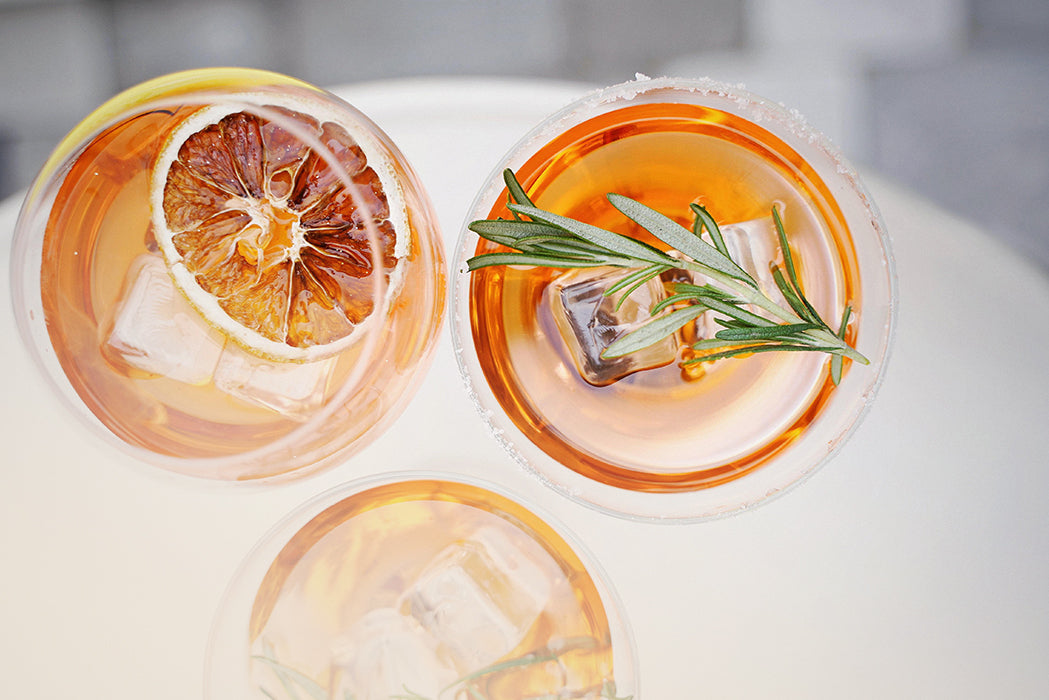
Adrienne's Berry Kombucha Bowl
Ingredients for 1 liter punch
- 1 bottle of pure kombucha
- 1 bottle of fruit-flavored kombucha
- 400 ml Rotbäckchen Immunstark
- 4 to 5 sprigs of rosemary
- 1 handful of blackcurrants
- 1 handful of blackberries and/or blueberries
- Ice cubes
Preparation
- Fill Kombuchery Pure and with fruit flavor together with the Rotbäckchen Immunstark juice into a large container or carafe.
- Wash the berries and rosemary well and add them in. Let it steep briefly for 10 to 15 minutes.
- Then fill it up with ice cubes and enjoy it chilled. Delicious!

Many more tips and inspiration on what else you can do can be found on Adrienne's blog. For everyone who also has a weakness for browsing through cookbooks and trying new recipes, I can also wholeheartedly recommend her cookbook "OH MY GUT, IT'S SO DELICIOUS!". (You can also find the cookbook here.)
Good luck with preparing and good health!



Share: