

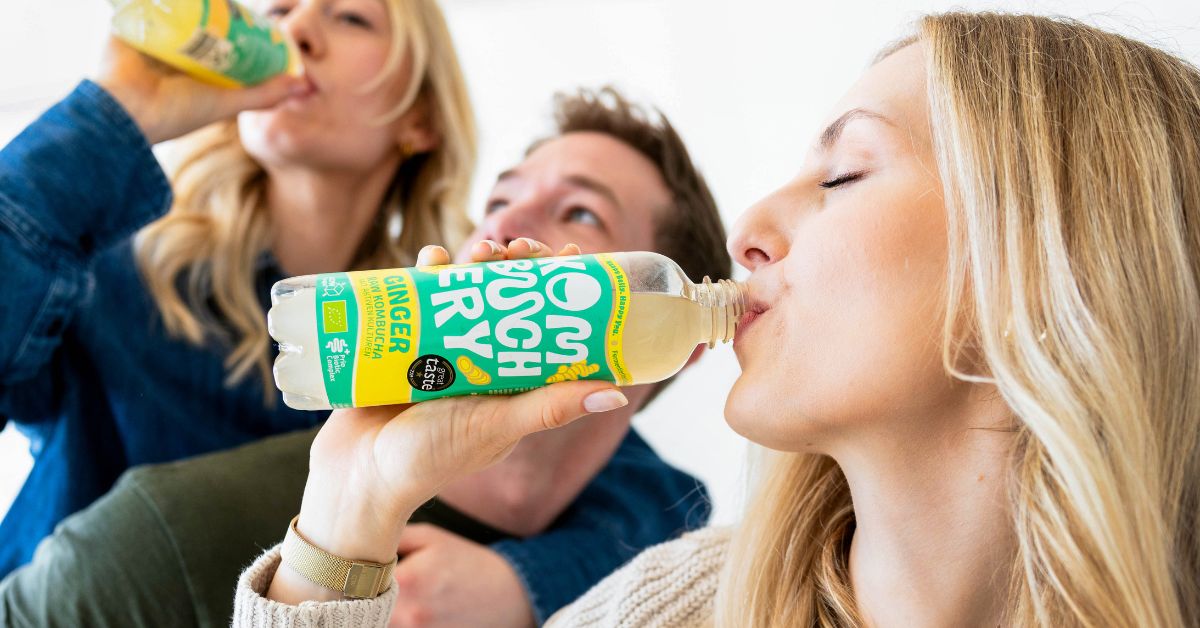

How much kombucha is good for me per day?
How much kombucha can you drink daily? Here you will find useful information about drinking routines, the 30-day challenge, ingredients, and the nutritional values of Kombuchery.
Kombucha is a fermented tea drink that may contain live microorganisms if it is unpasteurized. There is no generally recommended daily intake. How much kombucha fits into your daily life depends on several factors, including your individual tolerance and personal preferences.
How much kombucha should I drink daily?
Kombucha is not intended as a classic cure, but can be integrated into everyday life like other soft drinks. There is no scientifically established standard amount that is recommended for everyone.
If you are trying kombucha for the first time, it is best to start with a small amount and pay attention to how you tolerate the drink. Taste, acidity, and caffeine content can play a role. You can find out for yourself which variety and drinking routine suit you best.

How long should I drink kombucha?
Kombucha is a food and not a time-limited cure. If you like the drink and tolerate it well, you can regularly integrate it into your drinking routine.
A 30-day kombucha challenge can help you try different varieties and drinking times. It is not a medical program and does not promise any specific effect. Simply use the period to find out whether kombucha fits into your everyday life.
You can individually try out which drinking routine suits you best.
🧠 Our tip: Integrate kombucha, for example, in the morning, at lunch, or as a low-sugar alternative to classic soft drinks in the evening. Keep in mind that kombucha naturally contains caffeine because it is made from tea.
What happens after 30 days of drinking kombucha?
30 days is a popular period to try out a new habit. A month can also help you find out whether the fermented tea drink permanently fits into your everyday life.
After 30 days, you may know better:
- Which kombucha variety you like best.
- What time of day you prefer to drink kombucha.
- Whether you reach for a low-sugar refreshment more often.
- Whether kombucha has become a regular part of your drinking routine.
Everyone develops their own unique drinking routine. You do not have to drink kombucha daily or stick to a specific duration.
What is in a bottle of Kombuchery?
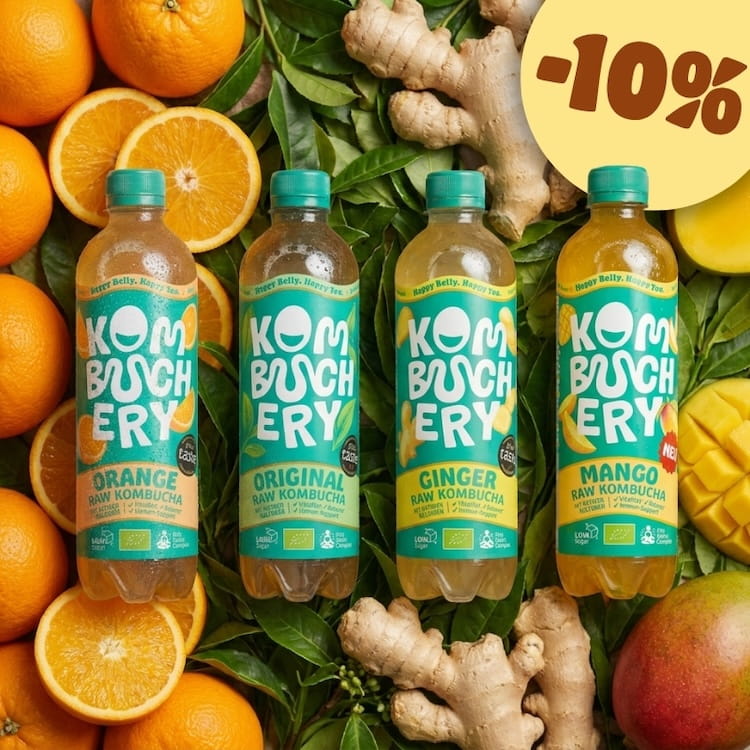
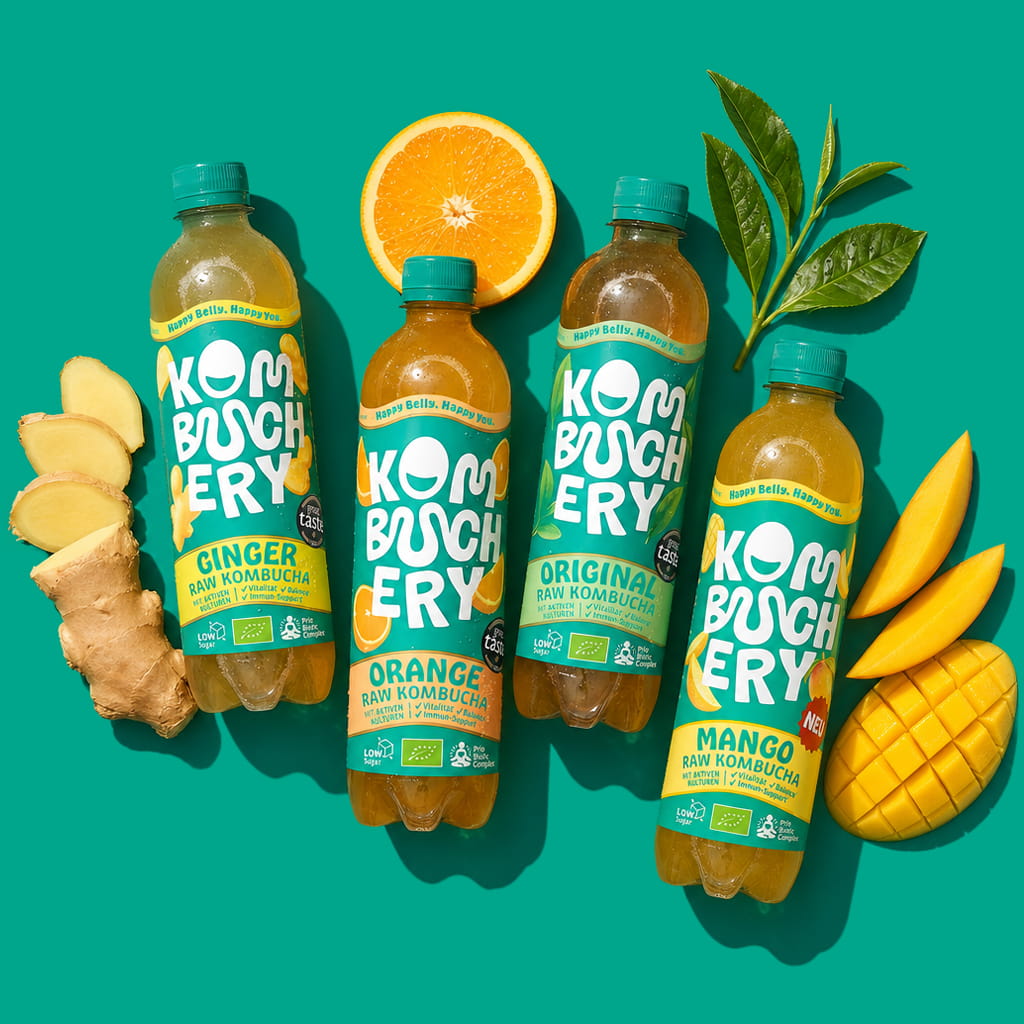
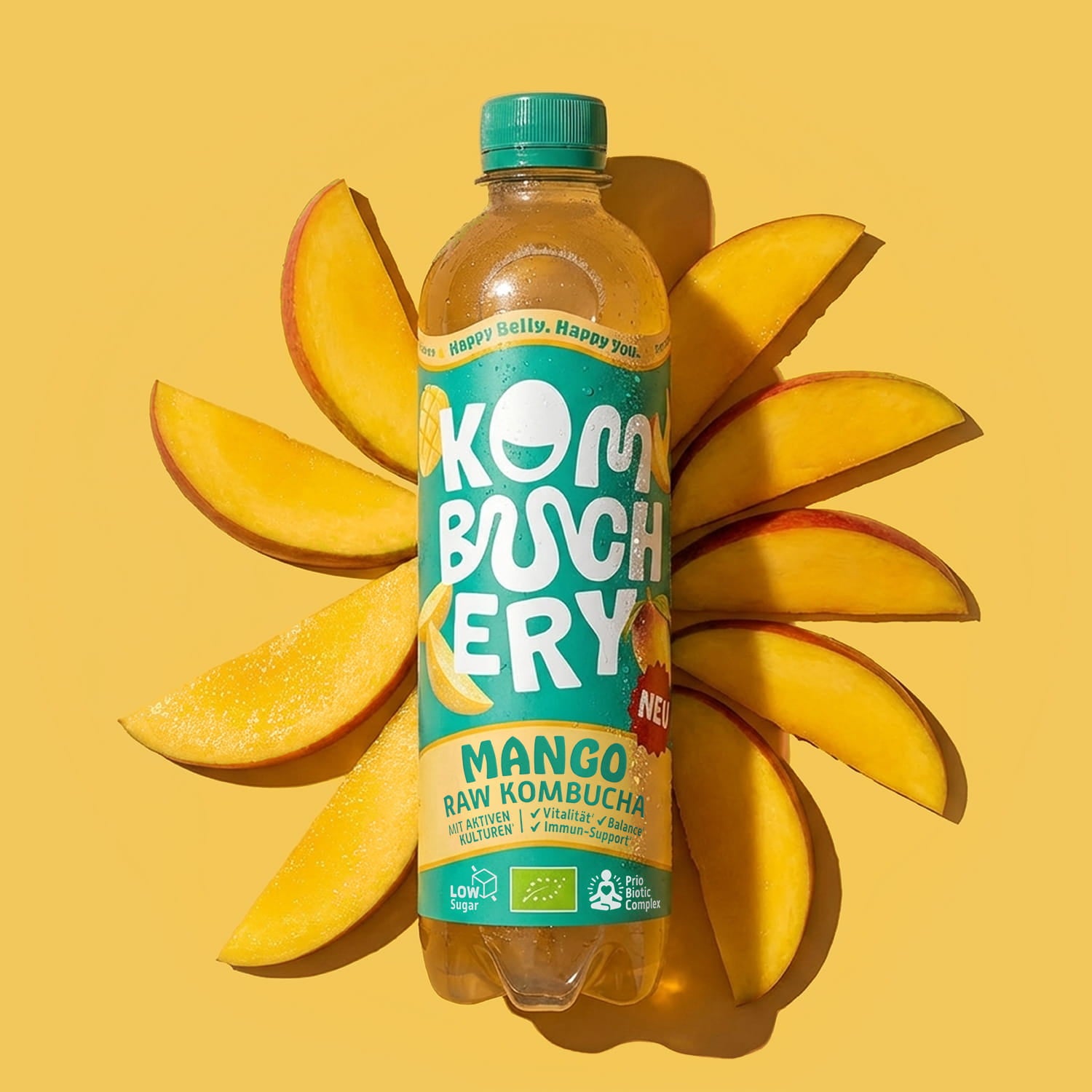
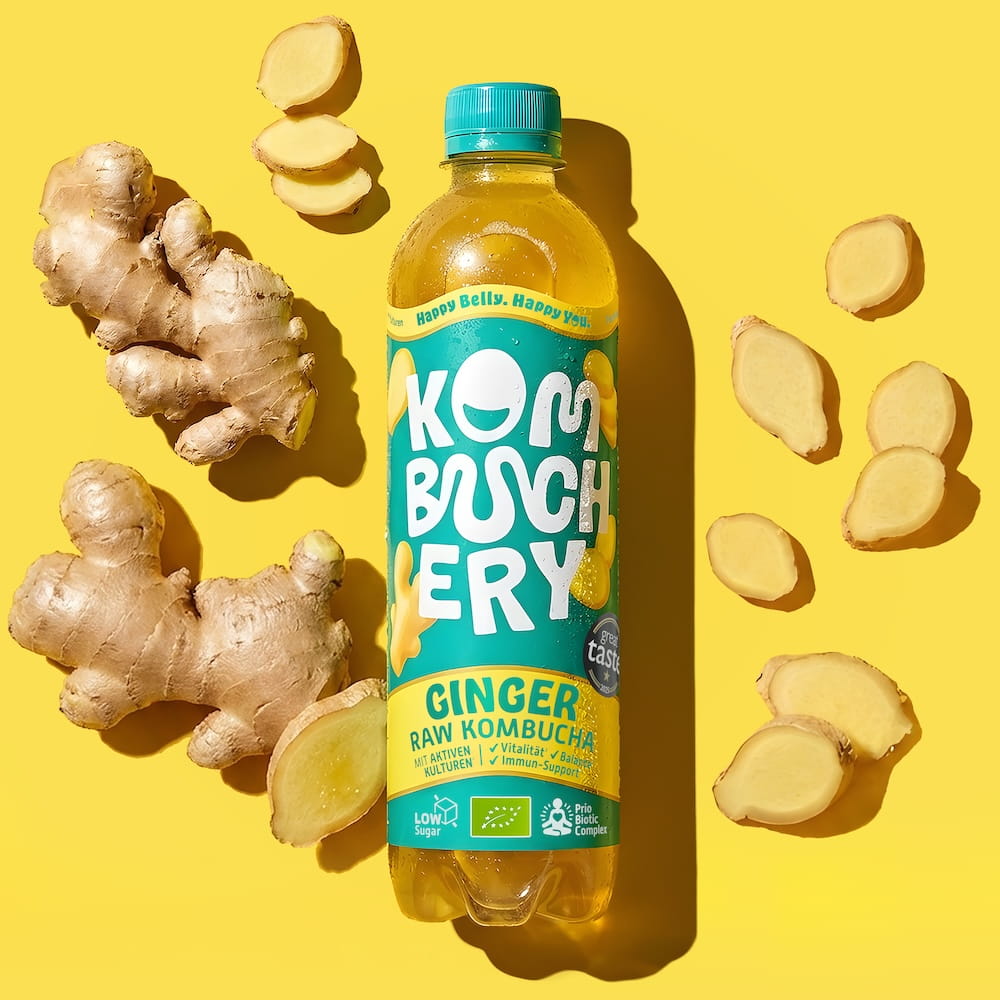
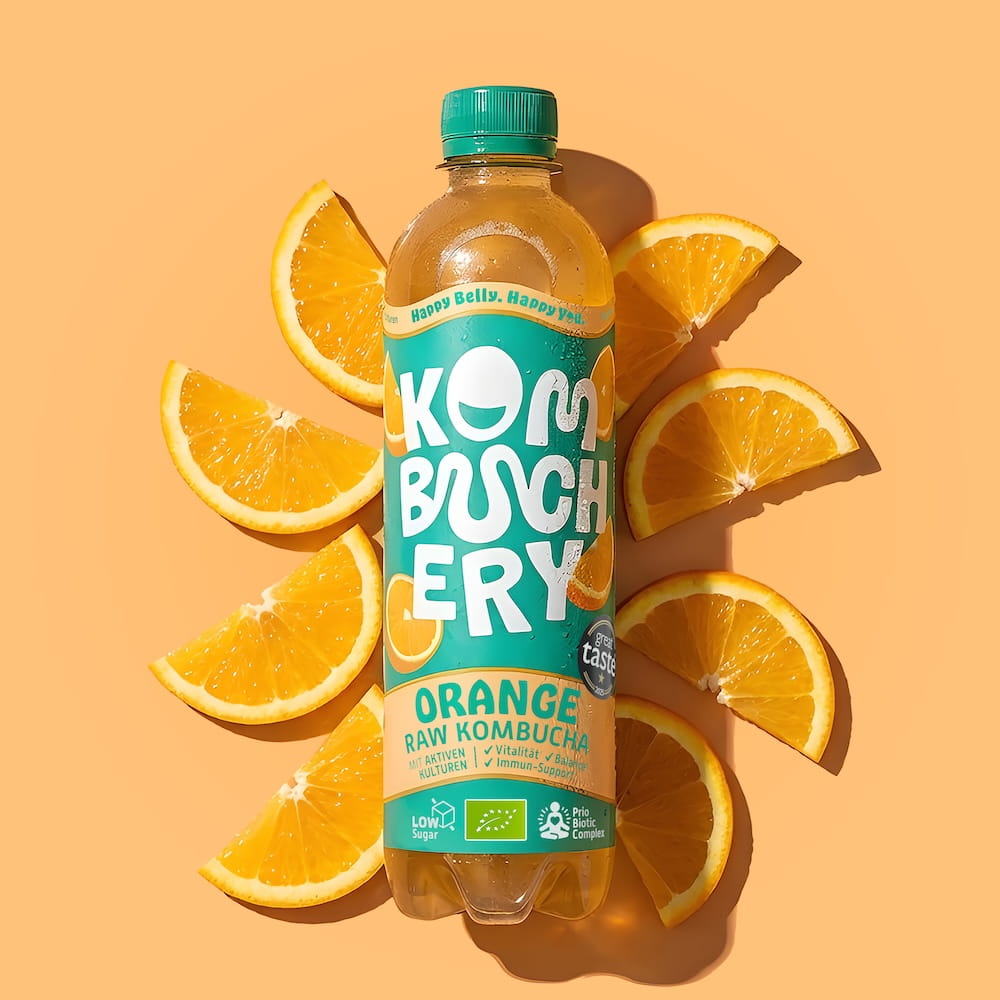
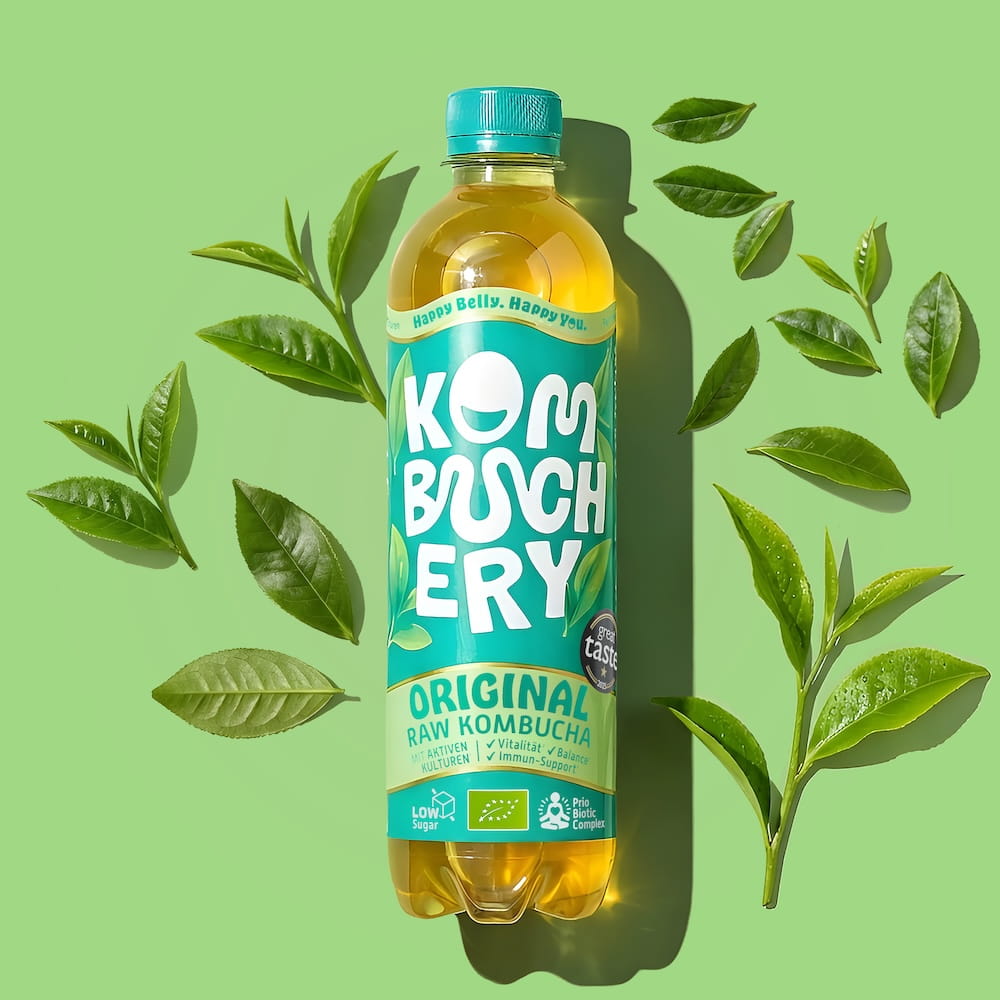
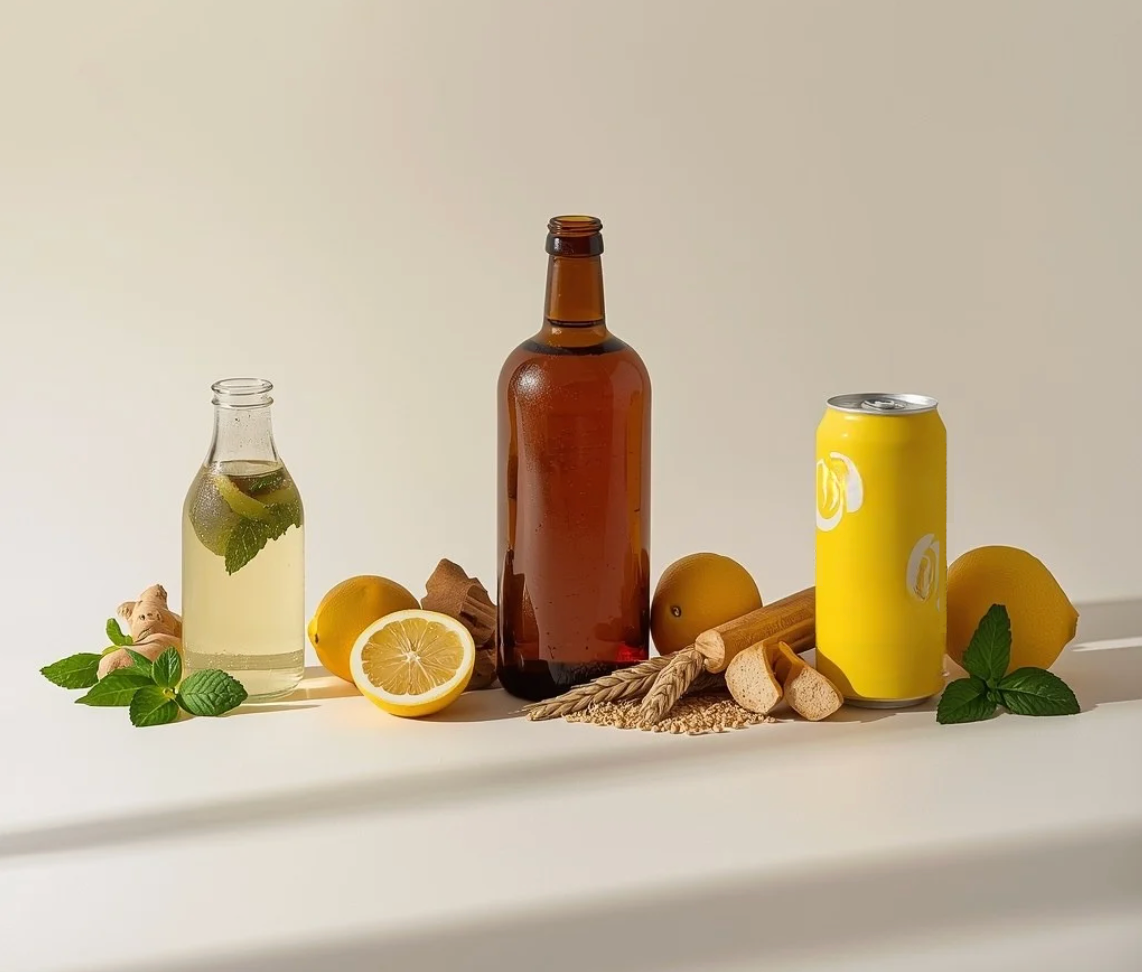
Our list of ingredients is as clear and transparent as our standards: kombucha made from selected organic ingredients and natural fermentation. Depending on the variety, you will find in your bottle:
- Organic green tea*
- Organic cane sugar, which is partially broken down during fermentation
- Natural mineral water
- Kombucha cultures of yeast and bacteria, including Lactobacillus rhamnosus
- Depending on the variety, organic juice, organic puree, or other organic ingredients
🚫 Unpasteurized and without added flavorings. Kombuchery is bottled unpasteurized and contains over 100 million live cultures.
Nutritional values at a glance
Nutritional values of Kombuchery per 100 ml:
- Energy: 39 kJ / 9 kcal
- Fat: 0 g
- Carbohydrates: 2.3 g
- of which sugars: 2.3 g
- Protein: 0 g
- Salt: < 0.01 g
- Vitamin C: 6 mg (7.5% NRV)
One bottle of Kombuchery contains 400 ml. A full bottle corresponds to 36 kcal and 9.2 g of sugar. You can decide individually how much of this you drink and how often kombucha is part of your drinking routine.
Frequently asked questions about daily kombucha intake
Is there a recommended daily amount of kombucha?
No, there is no generally scientifically established daily amount. Use your individual tolerance as a guide and consider how kombucha fits into the rest of your diet and drinking routine.
Can I drink kombucha every day?
If you tolerate kombucha well and like the drink, you can drink it regularly. You do not have to consume it daily. Keep in mind that kombucha may contain caffeine and small amounts of alcohol depending on the product.
Is a 30-day kombucha challenge worthwhile?
A 30-day challenge can help you try different varieties and drinking times and find a personal routine. It is not a necessary cure and does not guarantee any specific health effect.
How much sugar does Kombuchery contain?
According to the stated nutritional values, Kombuchery contains 2.3 g of sugar per 100 ml. A 400 ml bottle therefore contains 9.2 g of sugar. You should check the exact values using the current nutritional information on the respective variety.
Conclusion: Kombucha as part of your daily drinking routine
Kombucha can be easily integrated into your drinking routine. Kombuchery combines natural fermentation and selected organic ingredients with 2.3 g of sugar and 9 kcal per 100 ml.
Whether you drink kombucha regularly or occasionally enjoy it as a low-sugar alternative to classic lemonade: decide for yourself which amount suits you and your everyday life.
*Kombucha naturally contains caffeine because it is fermented from green tea. If you are sensitive to caffeine, keep this in mind when planning your drinking routine.




Share: